Category: Uncategorized

  • blog post #5

    2025

    • Feminist Servers, assembly at the 39th Chaos Communications Congress, Hamburg, 27-30 December 2025. Toot.
    • Technofeministische (Re)Produktionsweisen, workshop, Kunstgeschichtliches Institut, Ruhr-Universität Bochum, 11-12 December 2025.
    • Nothing comes without its world!, exhibition, Deutscher Künstlerbund Berlin, 13 September-21 November 2025. On the occasion of the presentation of the HAP Grieshaber Prize 2025, Cornelia Sollfrank takes the invitation to a solo exhibition as an opportunity not only to present a selection of her own works, but also to provide insight into the “world” that this work has helped to create: a long-standing relational network of Berlin-based and international agents. Accompanying event: Critical knowledge and communication infrastructure as aesthetic practice: Workshop for the tech*feminist art scene in Berlin, November 19, 2025, 10:30-18h. Toot.
    • Anti-Daedalus: A Manifesto Against the Cybernetic Hypothesis, by Lisbeth Salander and Maia Halassar, 1 May 2025, 42 pp. An analysis and critique of 80 years of global US hegemony based upon a cybernetic war machine, paired with a novel cyberfeminist reinterpretation of the Daedalus myth.
    • Living with Two Brains. Women in AI and New Media Art, symposium, Mori Art Museum, Tokyo, 15-16 February 2025. Organised by the Mori Art Museum and AWARE: Archives of Women Artists, Research and Exhibitions. Video documentation[1]
    cyberfeminism continues…
  • blog post #4

    I love to POST POST POST!!!

    Basically it’s TUMBLER IN HERE

  • blog Post #3

    Let’s Really Stretch the text limit here. Where do we trigger a ReadMore?

    Phase—Mother Earth (1968) by Nobuo Sekine, an influential work in the Mono-ha art movement

    Mono-ha (もの派) is the name given to an art movement led by Japanese and Korean artists of the 20th century. The Mono-ha artists explored the encounter between natural and industrial materials, such as stone, steel plates, glass, light bulbs, cotton, sponge, paper, wood, wire, rope, leather, oil, and water, arranging them in mostly unaltered, ephemeral states. The works focus as much on the interdependency of these various elements and the surrounding space as on the materials themselves.

    GO GO GO !! FASTER PUSSYCAT! MORE MORE !!
  • blog post #2

    Continuing Formatting Joys

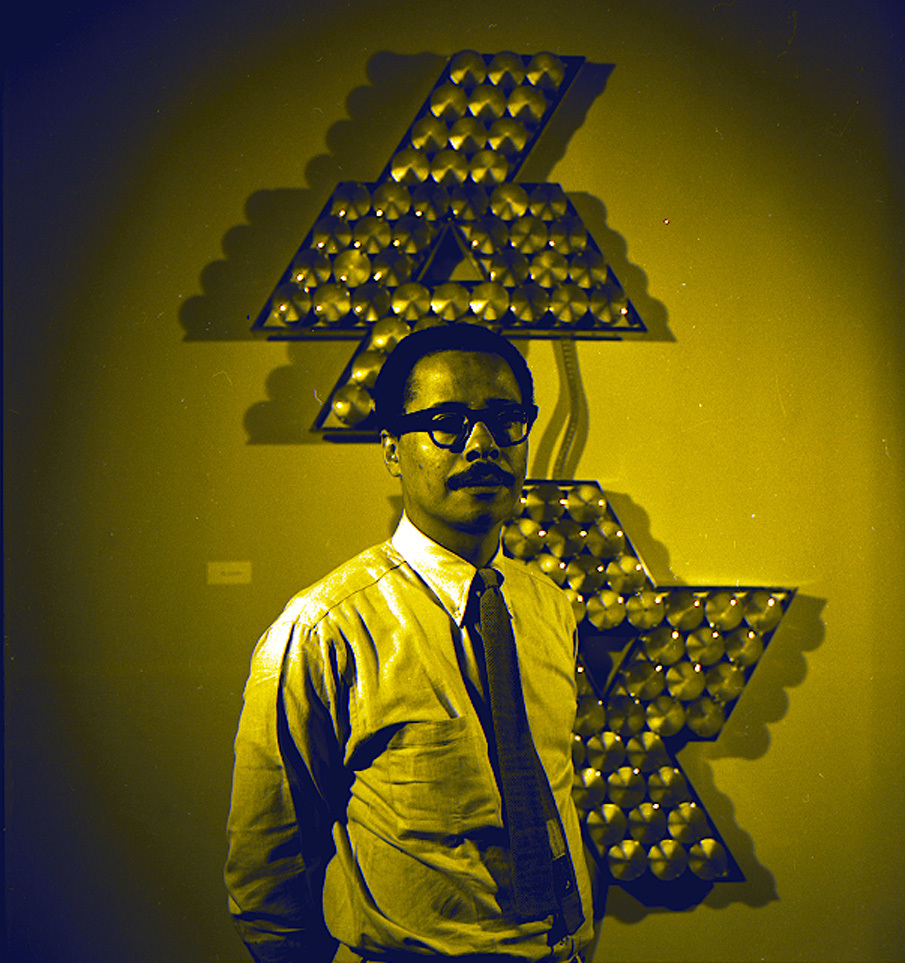
    Tom Lloyd, whose work was featured in the Studio Museum in Harlem’s inaugural exhibition in 1968, was a visionary who transformed technology into a powerful form of art. With the support of a scientist-engineer at the Radio Corporation of America (RCA), Lloyd created electronically programmed light sculptures. His art challenged conventional ideas about the role and work of Black artists, opening new possibilities for creativity and representation.
    why did this containerize itself?
    Tom Lloyd, whose work was featured in the Studio Museum in Harlem’s inaugural exhibition in 1968, was a visionary who transformed technology into a powerful form of art. With the support of a scientist-engineer at the Radio Corporation of America (RCA), Lloyd created electronically programmed light sculptures. His art challenged conventional ideas about the role and work of Black artists, opening new possibilities for creativity and representation.
  • blog post #1

    A Test of Formatting

    A Heading – Don’t Care for this Font, Actually

    We love to link and to include Images!

    That inline image is fucked up and tiny, let’s try again

    Ohoho! A Caption can be Added – but why is this is sans font?
    • Footnotes?